Academic Podcast Production / Editing & Transcripts
Academic podcast editing for long-form interviews, panel recordings and remote conversations where clarity matters. Technical cleanup, editorial shaping and transcript delivery in one workflow.
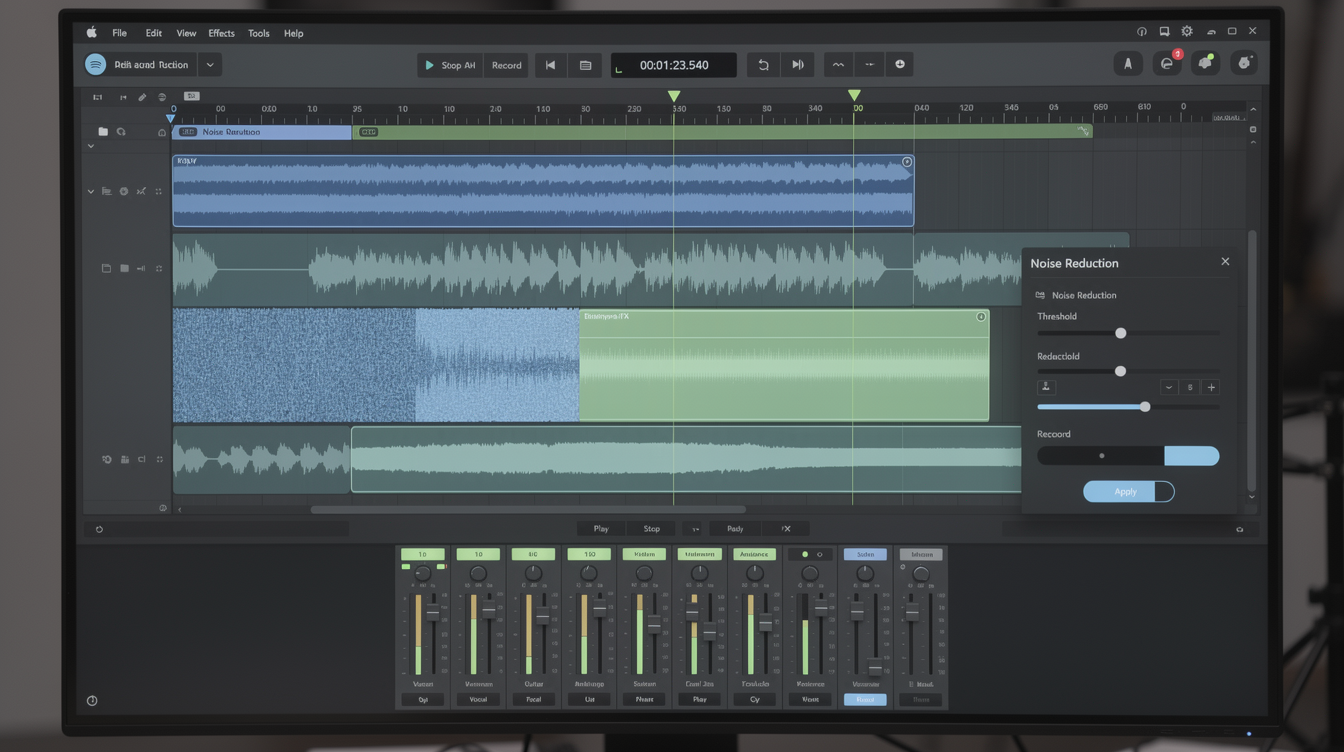
Editing has two distinct layers: technical and editorial. Both are necessary. Neither is sufficient on its own.
Most academic recordings are not made in professional studios. The common problems are:
A 90-minute academic conversation recorded for a podcast is not a 90-minute episode. The spoken form of an argument includes repetition, false starts, and passages that are necessary in real conversation but not in audio — acknowledgements, extended scene-setting, restating what was just said in slightly different words.
The editorial task is to identify and remove what slows the argument without altering what the speaker is actually saying. This requires understanding the argument well enough to distinguish a productive digression from a redundant one.
I have a postgraduate academic background (MA Renaissance Studies, University of Sussex) and have produced approximately 50 episodes on topics across politics, sociology, philosophy, and international relations. I can engage with the content at the level required to make these judgements reliably.
Nothing is edited without the client's approval for significant cuts. The intellectual content is not changed. The pacing is.
After editing, the episode goes through mixing — balancing levels, removing any remaining noise floor artefacts, setting the stereo field where applicable — and mastering to the current podcast loudness standard (–16 LUFS integrated for most platforms, –14 LUFS for Spotify-optimised delivery).
The finished master plays consistently across headphones, earbuds, speaker systems, and in-car audio. It meets the technical requirements of all major podcast directories.
Episode notes are often treated as an afterthought. They should not be. Well-written episode notes — accurate to the content, structured for platform display, and genuinely useful to a potential listener — improve discoverability and give the episode a life beyond the initial release.
Episode notes are included in the standard production package. They are written from the finished edit, not from a brief or a guess at the content. They are not marketing copy; they describe what the episode actually contains.
Transcripts serve two purposes: accessibility (listeners who are deaf or hard of hearing, or who need to read rather than listen) and search (transcripts make the content of the episode indexable by search engines).
Transcripts are coordinated and quality-checked as part of the same workflow. The process:
Transcripts are priced at £200 per episode.
If you have a back catalogue of unedited recordings — episodes recorded but never produced, or produced to a standard that no longer reflects the quality of your content — I can work through these on the same basis as new commissions. Send a sample and I can give an assessment of what is possible.
Send a sample recording and a brief description of the project. I will respond with an honest assessment of what is possible and what it will cost.
simonindelicate23@gmail.com